Resource
Field Notes: Salespeople Are Not Hunters Anymore
Published June 3, 2025 by Kevin Davis · Updated March 31, 2026
Go-to-market organizations are shifting hunting responsibilities (finding the right accounts) away from salespeople and into the hands of Operations teams. When you ask the best performing companies whose job it is to find accounts to sell to, the answer is no longer sales reps -
Go-to-market organizations are shifting hunting responsibilities (finding the right accounts) away from salespeople and into the hands of Operations teams. When you ask the best performing companies whose job it is to find accounts to sell to, the answer is no longer sales reps - it's Ops teams using large customer datasets with LLMs to deliver unprecedented, surgical focus and precision. This shift leads to higher average sales prices, shorter sales cycles, higher sales productivity, and better ROI on data investments. There's even a surprise benefit of higher job board reviews and sales rep retention. Let me show you what I mean by walking through how sales has traditionally worked.
When I started in sales, the job of a rep was split in two parts.
The Old Way
1. The Hunter: Search for companies to sell to
This part took up most of my time. Pipeline was everything. I spent hours hunting through Google, ZoomInfo, and LinkedIn, tracking executive changes, setting up news alerts. Basically I was playing detective to find companies that might buy from us. There was an internal presentation I could consult for our ideal customer profile and persona. I also spent time trying to figure out lookalikes based on our existing customer base. But I was mostly free-wheeling my research. I would come up with creative ideas and skew my searches toward people more likely to accept a meeting invite. This was the job. It was market research. If you ground hard enough, you would find the right accounts at the right time. My colleagues and teammates were doing similar activities and we'd share notes and compete to put the 'best accounts' in our name in CRM. Acme Corp just got funding…oh dang Ryan already reached out to them. As I met more salespeople and got introduced to more sales teams, I learned that this was the job - many individual sellers conducting their own market research to find the right companies to sell to.
**2. The Closer: Engage those companies to progress them in the customer journey **
This part meant acting to try to move the customer one step closer to buying and renewing our product. When I started this was ground zero: cold calling & cold emailing. Cold calling and cold emailing were the second biggest time suck after the hunting phase. The engagement of the cold call got the prospect to take an initial meeting, a Discovery Call. Step 1 in the customer journey. In this Discovery Call, the goal was to qualify the fit and timing of the prospect by asking them questions about things you couldn't find the answers to online. This engagement then led to Step 2, which was to have a solutions consultant deliver a demo. The sales rep then needed to continue engaging all the way to closing the deal. Massive amounts of resources, enablement, and energy went into improving cold calling and cold emailing: how to run better calls, write better emails, what time of day to call people, what time of day to email people, subject lines, power hours, what discovery questions to ask, etc. Everybody was tracked for how many calls they made, emails they sent, meetings they held, and pipeline they generated. But nobody asked the question: are we selling to the right accounts? As I started to observe more sales organizations, I noticed problems with this approach.
Problems with The Old Way:
1. Time Was ‘Wasted’ on Hunting
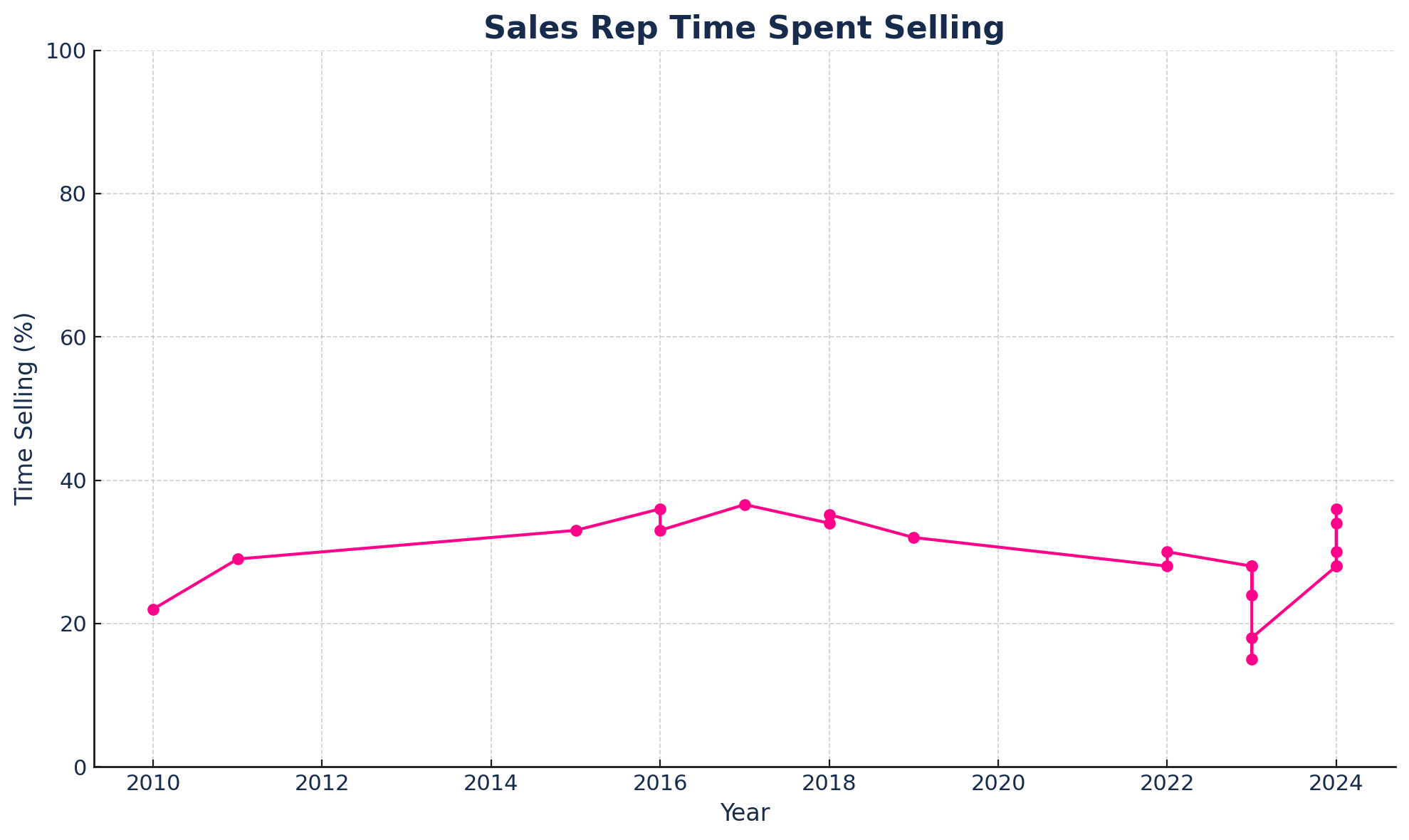
For decades, sales leaders have wrung their hands over the same statistic: salespeople only spend 30% of their time actually 'selling.' The other 70% gets labeled as waste - administrative tasks, internal meetings, and market research that keeps reps from doing their 'real job.' But here's what's backwards about this framing: hunting for the right accounts ISN'T a distraction from selling - it IS selling. Finding qualified prospects might be the most important part of the entire process. Yet we don't value it. No executive does account research. It gets pushed to junior reps who know the least about product-market fit. It's not measured, not compensated, not organized. We treat our most critical sales function like busy work. This devaluation of hunting creates a predictable result: companies stop investing in doing it well.
2. Precision Was Not a Priority in Hunting
The simple question, 'are we targeting the right accounts?' is not engrained. Generic parameters are used: Industry, Size, Geography. 'Healthcare companies under $1B in revenue' - as if every healthcare company has the same needs. But product-market fit is much more precise than these broad categories. Your product isn't built for 'healthcare' - it's built for specific types of healthcare organizations facing particular challenges. Modern data sources could enable surgical targeting, but companies default to these crude filters because that's how hunting has always been done. When you lump all healthcare companies together, you're forced to reach out to everyone in that category just to find the few who actually fit. The result: spray-and-pray outreach that annoys prospects and wastes time. Without targeting criteria that matter, every rep becomes their own market researcher, creating chaos at scale.
3. Hunting Experiments Were Siloed
When each rep builds their own account list based mostly on gut feel and their own ability to search, companies are running loads of uncontrolled experiments at once. Nobody can tell what is working. There is no feedback loop. Product teams get vague insights. Marketing builds for personas that may not exist. This fragmented approach prevents companies from ever building institutional knowledge about their true product-market fit. If ten reps are running ten different experiments within 'healthcare' using their own criteria, the organization never learns which specific types of healthcare companies actually convert. Without organized experimentation, companies never get better at focusing. This fragmented approach becomes even more wasteful as the data landscape explodes with new possibilities.

4. Powerful New Data Sources Are Going to Waste
We're living in a golden age of market intelligence. Companies now have access to data that would have been impossible to gather just a few years ago: real-time website behavior, event attendance patterns, technology stack changes, hiring signals, even AI-powered sentiment analysis of executive communications. Layer on top of that the emergence of LLMs and AI tools that are incredibly good at organizing, searching, and finding patterns in massive datasets. These tools can synthesize information across dozens of sources to identify the perfect prospects at exactly the right moment. But here's the problem: all of this expensive, sophisticated data is being filtered through individual sales reps who aren't trained as data analysts. They don't know how to use the AI tools effectively. They don't have time to learn complex data platforms. They default to the same basic searches they've always done - industry, size, geography - while terabytes of valuable targeting intelligence sit unused. Companies are paying for powerful data sources and AI capabilities, then asking their least technical team members to somehow turn that into actionable prospect lists. It's like buying a Formula 1 car and asking someone to drive it who's never left first gear.
The New Way
After a while, I started working for Google Cloud, which sells cloud infrastructure. When I first arrived, the hunting responsibility was the same as the Old Way. I was given a geo and told happy hunting. But by the time I left 7 years later, a complete shift to a data driven approach had taken place. By the end salespeople were handed a specific set of accounts for a specific set of reasons (e.g. AI FinTech startups in Austin,TX or a certain revenue growth velocity, with a certain tech stack,…etc.). The market research portion of the job was being done by Operations, at scale. This was happening at the start of large language model boom and it became clear that sales organizations were finally unlocking the reservoirs of data that lay beneath the surface. I left Google with the hypothesis that this data explosion represented a huge market opportunity - territory planning could be completely turned on its head with the right tools. That's why I started BoogieBoard. It became my job to talk to every sales organization I could to figure out how and why they were operating. What I noticed was that many companies had elevated high performers within their Operations teams to specifically be always searching for the best accounts in a data-driven, quantitative, measurable way. The Operations teams had access to amazing reservoirs of customer data and prospect data. First party, third party, timing signals, technographics. The list goes on.
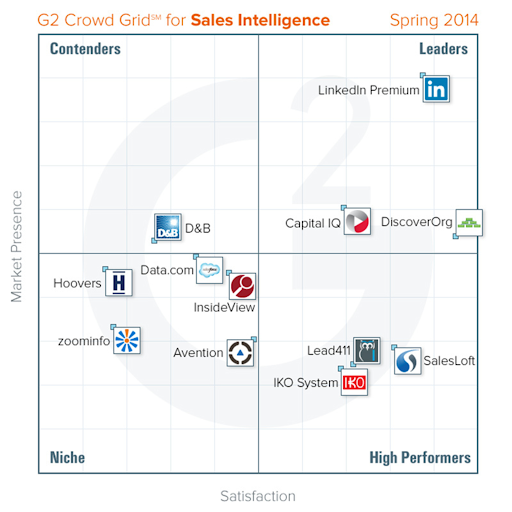
G2’s Sales Intelligence Matrix in 2013
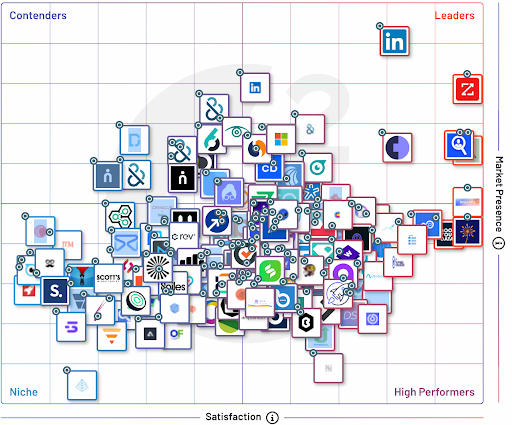
G2’s Sales Intelligence Matrix in 2023
The availability of valuable account data multiplied, as did the means to effectively employ it: Snowflake, Clay, and of course Large Language Models.
This New Way solved the problems of the Old Way:
1. Precision:
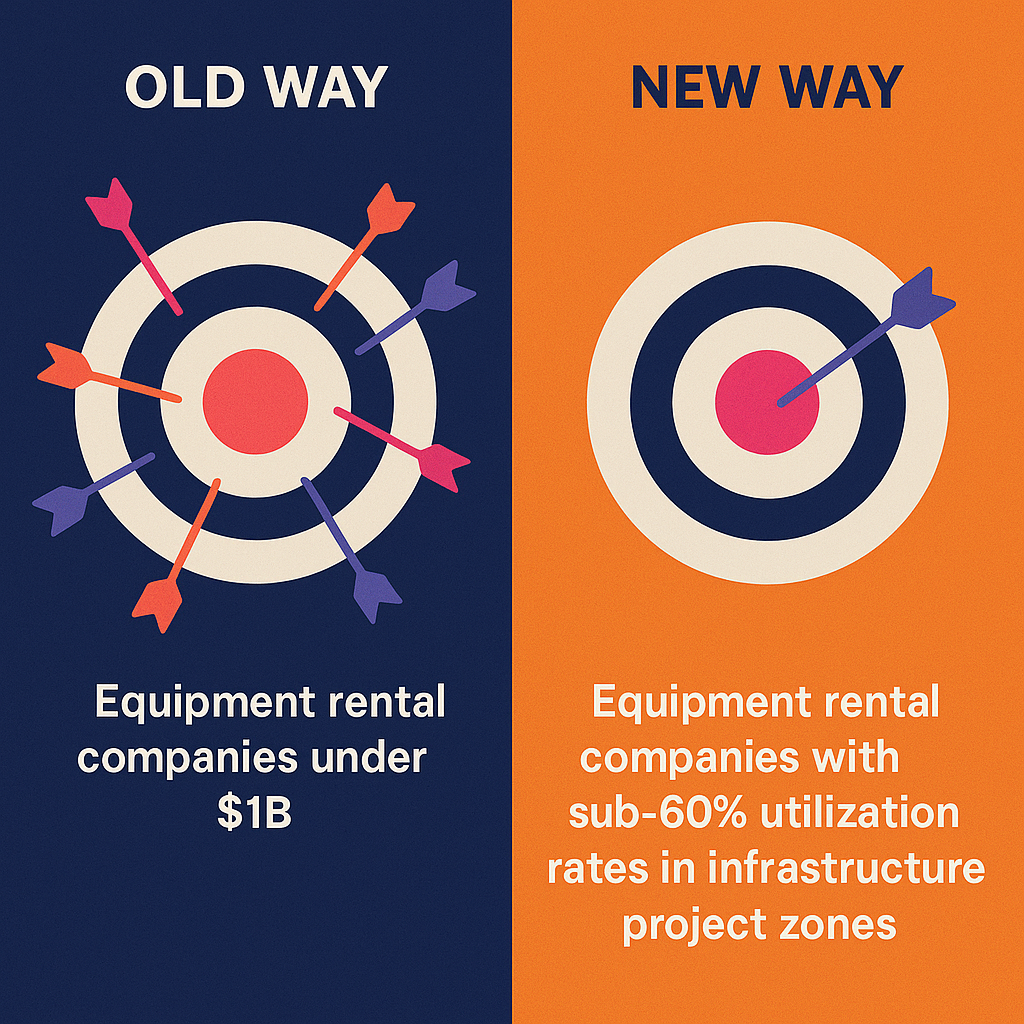
The difference in targeting precision is huge. Instead of the old way's broad parameters like "equipment rental companies under $1B," Operations teams can now create surgical definitions.
Take this example from the team at Cannonball GTM, who demonstrated this live with equipment rental company Texada. Instead of targeting "equipment rental companies," they created this precise definition:
"Equipment rental companies with sub-60% utilization rates, operating CAT excavators and similar heavy machinery, located within 50 miles of major infrastructure projects, with recent DOT transport permits showing idle equipment, and building permit data indicating upcoming demand in their service area."
This level of precision comes from combining multiple data sources - DOT transport records, building permits, equipment registrations, contractor licensing databases, and technographic data. What used to take a sales rep hours of manual research can now be automated and applied to entire markets in about 30 minutes.
What makes this even more remarkable is how accessible this approach has become. The Cannonball GTM team accomplished this using publicly available LLMs (Claude, which costs about $25/month), openly available prompts from their methodology, and entirely public data sources. The whole process is essentially free beyond the LLM subscription and can be replicated by following their framework in the linked video.
The impact is immediate: Instead of cold-calling 1,000 "equipment rental companies" to find 20 qualified prospects, Operations teams identify those 20 prospects directly and hand them to sales with context about why they're perfect targets right now. Average Sales Price increases because you're reaching companies with the exact problem your product solves, at the exact moment they need to solve it.
2. Time selling:
The dynamic changes completely. Reps can skip generic discovery calls and start meaningful conversations about specific business challenges.
This leads to faster, higher-value deals and happier salespeople who can focus on what they got into sales to do: building relationships and solving problems.
3. Experiments:
When targeting becomes organized, companies can actually test and measure their approaches. Instead of ten reps running ten different untracked experiments, Operations can A/B test messaging, outreach timing, and ICP definitions at scale.
This creates a continuous feedback loop that makes companies smarter over time. They can backtest what worked, refine their targeting criteria, and iterate on ideal customer profiles based on real conversion data. Crucially, this approach can now incorporate rep feedback in a structured way. When salespeople disqualify accounts or provide feedback through surveys, that intelligence gets built directly into the targeting models. The intuitive knowledge that great reps develop - why certain prospects felt off, what subtle signals indicated bad timing - can now be captured as data and applied across the entire sales organization. This means the entire organization—Product, Marketing, Finance—develops a deeper, data-backed understanding of their best customers that combines both analytical insights and human judgment.
4. Data:
All those expensive data lakes and warehouses companies have built finally pay dividends. The investment in data infrastructure that sat largely unused now becomes a competitive advantage, generating targeting intelligence no individual rep could surface manually.
This advantage compounds over time. As data sources improve and AI tools become more sophisticated, companies that have learned to use their data assets will accelerate ahead of those still stuck in manual hunting mode.
And this is just the beginning, the returns on the data asset will only compound as the data availability grows, the structurability improves, and the tools for research adapt and become more widely known.
What does this mean for Salespeople?
Salespeople are now being put in a different position - one that plays more to their strengths. Most salespeople got into sales because they enjoyed the human portion: the conversation, the relationships, the tangibility of helping real people solve real problems. But the old way forced them to spend most of their time playing detective instead of building relationships. Now reps are handed focused lists instead of hunting for gems themselves, which saves time. But more importantly, they're starting conversations later in the customer journey. There are no more generic discovery calls asking basic questions like "How many employees do you have?" Operations already knows this. Reps can skip straight to meaningful conversations about specific business challenges. This creates more informed, substantive conversations from the start. Since Operations handles the "what" and "who," salespeople can dive deeper into the "how" and "why" of the customer's internal world - how internal policies work, internal buying processes, product roadmaps, the politics of decision-making. This intimate understanding allows them to treat prospects with a great deal more respect. Gone is the hunter and prey dynamic. Gone is the illusion that salespeople control the buying process.
Salespeople are Surfers
The best salespeople understand they're riding forces much bigger than themselves. Like surfers, they read conditions, time their entry perfectly, and ride momentum rather than fighting it. As big wave legend Laird Hamilton puts it:
"If you don't understand the wave, you can't respect it. And if you don't have respect, it's only a matter of time before the ocean teaches you to get some."
The same applies to sales - you can't control the customer's buying process, but you can learn to read it, respect it, and ride it skillfully. The real intelligence lies below the surface - not in company size or industry, but in timing, internal dynamics, and readiness to change. Great salespeople, like great surfers, develop an intuitive feel for these hidden currents. They know when conditions are right for their approach and when to wait. They understand that the most epic deals, like the most epic waves, require patience, preparation, and perfect timing. They've learned from wipeouts - deals that looked perfect but crashed because they misread the conditions or entered too early. This metaphor defends everything we've argued: Operations teams provide the wave forecast and identify the best breaks. Salespeople show up at exactly the right time and place, with the right skills to ride the opportunity. They're not creating the wave - customer need, budget, timing - they're capitalizing on existing forces and riding them skillfully toward close. Most importantly, surfers have profound respect for the ocean's power. As Duke Kahanamoku, the father of modern surfing, said:
"Out of the water, I am nothing."
Great salespeople understand the same relationship with their customers - they succeed by working with the customer's agenda, not against it.